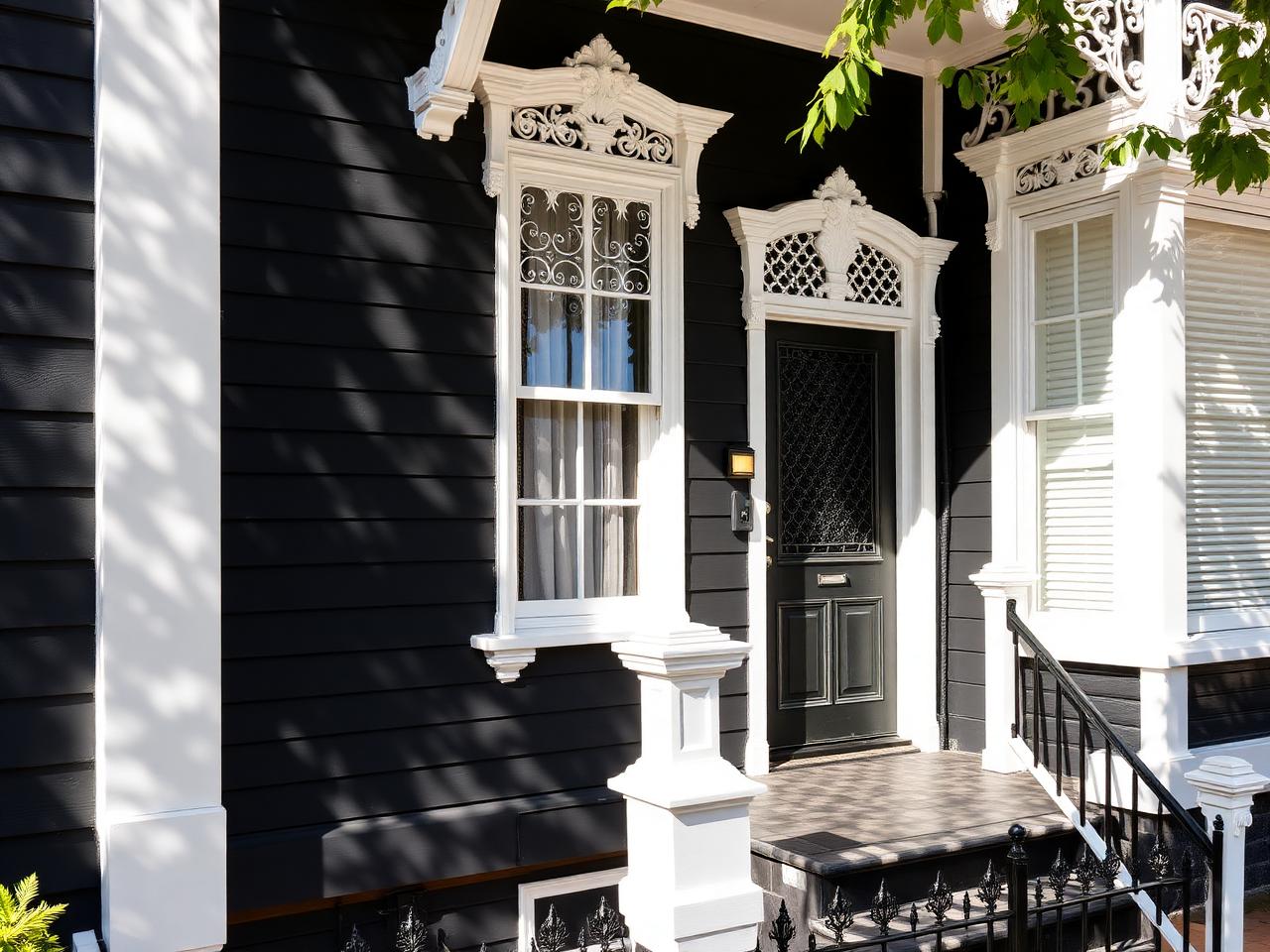
 Fences
Bentleigh · Family Home · 2025
Sixty-Metre Paling Fence Spray Finish
Sixty metres of weathered treated-pine paling sprayed in charcoal across two days, with written neighbour agreement on both boundaries before a brush was lifted.
- Monument
Boundary fences, gates and screens brought back to a crisp line.
The short answer
A fence repaint needs the grey, weathered surface layer removed before coating — washing and sanding back to sound timber, priming bare sections, then spraying or brushing two even coats. Skipping the sand is why most fence coatings peel in the first two summers.
A fence frames everything else you have paid for. Left grey and furry it drags the whole property down; sprayed and cut in properly it sharpens the entire street presentation.
We sand back weathered timber, treat and prime bare sections, replace unsound palings on request and spray-apply for an even film on both faces where access allows.
Typical specification: oil-based primers on bare timber, exterior acrylic or solid-colour stain topcoats rated for full sun exposure.
How we prepare
Preparation is where the money either goes or gets saved, and it is the part you cannot see once the job is finished. This is exactly what happens before colour goes on.
Fences are washed to remove dirt, mould and the loose grey fibre layer, then given time to dry to below 15% moisture. Coating damp timber traps water behind the film.
Ultraviolet degrades the top fraction of a millimetre of timber into a powdery layer nothing bonds to. It is sanded off — this single step is the difference between a two-year and an eight-year finish.
Unsound palings are replaced on request, loose nails re-driven, bare timber spot-primed, and metal posts or Colorbond panels treated for rust and etch primed.
Garden beds, paths, pool fencing and the neighbour's side are masked and drop-sheeted, and spray work is scheduled for still conditions to eliminate overspray drift.
Timber palings
Exterior acrylic or solid-colour stain rated for full sun. Solid stain penetrates rather than films, so it weathers back gracefully instead of peeling in sheets.
Heritage pickets
Oil-based primer on bare timber then exterior waterborne enamel, cut by hand so the profile stays crisp and the shadow lines read properly from the street.
Steel and Colorbond
Rust converter, etch primer and a DTM acrylic topcoat matched to the existing Colorbond colour.
Retaining and screening
Penetrating oils on hardwood screens where you want grain visible rather than a solid colour.
Hold us to these. They are written into every fence painting proposal we issue.
Every fence painting proposal we issue names the products, the number of coats and the preparation steps above, so you can compare it line by line against any other quote.
Request a written specificationCompare the options
The right finish depends on how much timber grain you want to see and how you want it to age.
| Finish | Look | Life in full sun | Recoat behaviour |
|---|---|---|---|
| Exterior acrylic | Solid colour, film build | 6–8 years | Sand back edges where it lifts |
| Solid colour stain | Solid colour, grain texture visible | 4–6 years | Wash and recoat, no stripping |
| Semi-transparent stain | Natural timber tone | 2–3 years | Wash and recoat |
| Penetrating oil | Rich natural grain | 1–2 years | Wash and recoat |
Colorbond and steel fencing sits outside this table — it is prepared and coated as metal, not timber.
Recent projects
Each case study documents the condition we started with, the preparation, the products, the colours and the finished result.
FencesBentleigh · Family Home · 2025
Sixty metres of weathered treated-pine paling sprayed in charcoal across two days, with written neighbour agreement on both boundaries before a brush was lifted.
FencesKew · Heritage · 2024
An 1890s picket fence and gate stripped by hand, repaired picket by picket and finished in a three-coat heritage gloss scheme matching the house.
Related articles
Our Knowledge Centre explains the decisions behind this work in full — costs, products, preparation and the mistakes that cause early failure.
Common Paint Problems · 3 min read
Paint peels for four reasons: moisture behind the coating, inadequate surface preparation, incompatible coating layers, or applying paint over a chalky or dirty surface — and the repair differs completely depending on whether the paint peels between coats or back to the bare substrate.
Read the guideExterior Painting · 3 min read
In Melbourne, expect to repaint weatherboard every 8–12 years, rendered walls every 10–15 years, and window frames and doors every 5–8 years — north and west elevations typically need attention two to four years earlier than south and east ones.
Read the guidePaint Colours · 3 min read
Mid-tone greys, warm off-whites, muted greens and deep charcoals hold their appearance longest on Melbourne exteriors; highly saturated reds, bright blues and organic-pigment colours fade fastest on north and west elevations.
Read the guideMaintenance · 3 min read
Once a year, wash exterior walls with a soft brush and diluted detergent, treat any mould, clear gutters, inspect and re-caulk failed joints, and touch up exposed timber — a routine that typically adds three to five years to an exterior repaint cycle.
Read the guideQuestions
Real questions from Melbourne homeowners, answered the way we answer them at the kitchen table.
Question we have not covered? Send us photos with your enquiry and we will answer it against your actual surfaces, not a general case.
Ask us with photosWhere we work
Choose your suburb for local detail on housing stock, exposure and typical scope.
Also consider
Walls, ceilings, cornices and joinery finished to a furniture standard.
Weather-engineered systems for Melbourne's brutal seasonal swings.
Offices, retail, strata and hospitality painted around your trading hours.
Restoration-grade coatings that reset your roof's next twenty years.
Tell us about your painting project and a project manager will be in touch.